Skip to content

Radar AI Risk

AI Risk Governance

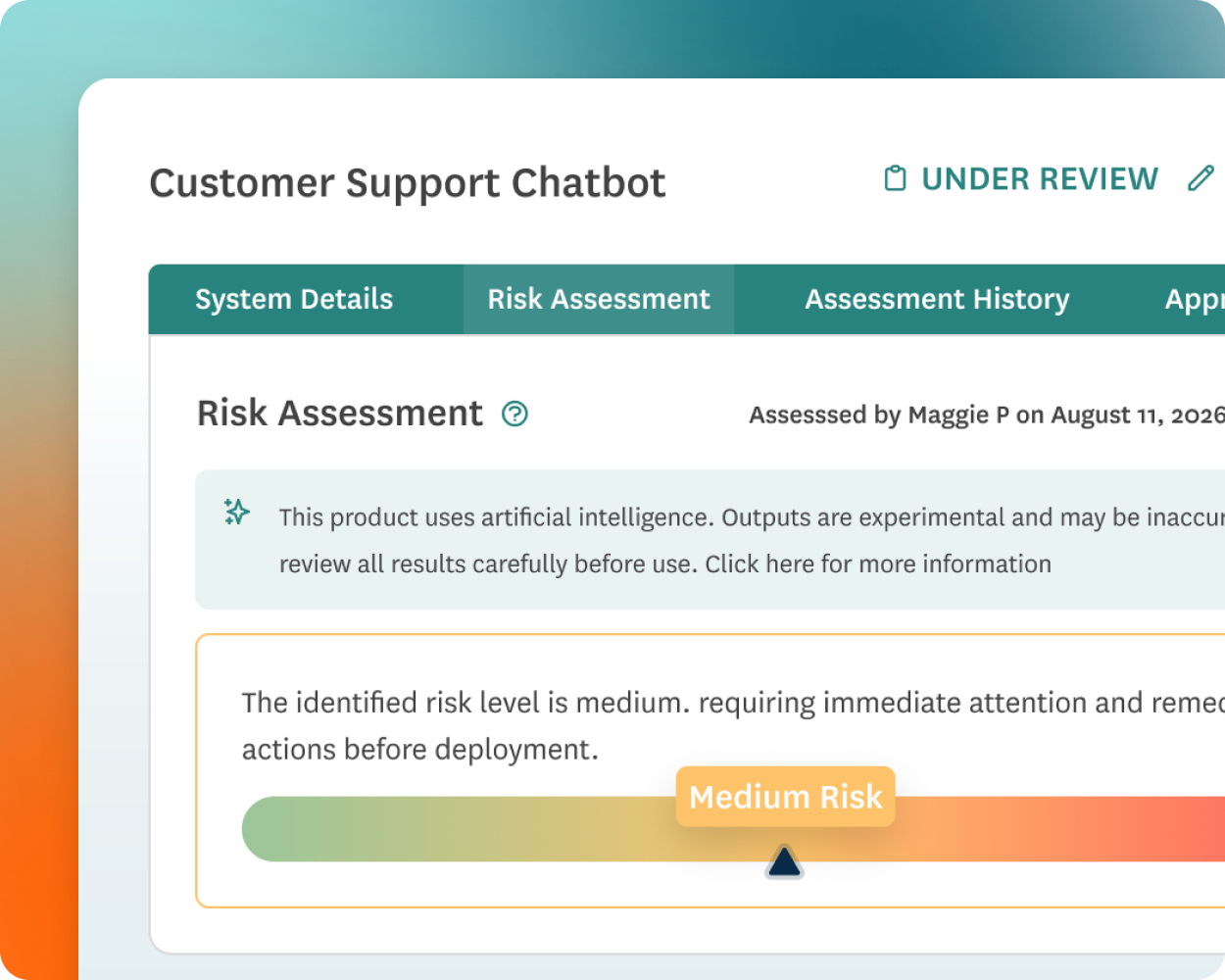
Inventory AI systems, assess AI risk and compliance against policies and regulations, and generate audit-ready, explainable documentation.
Request A Demo

Turn AI Policies Into Operational Governance

AI governance requires consistent evaluation of systems against policies and regulations. Radar AI Risk enables teams to assess AI systems, classify risk, and generate defensible, audit-ready decisions with clarity and consistency.

Policy-Driven Governance You Can Apply

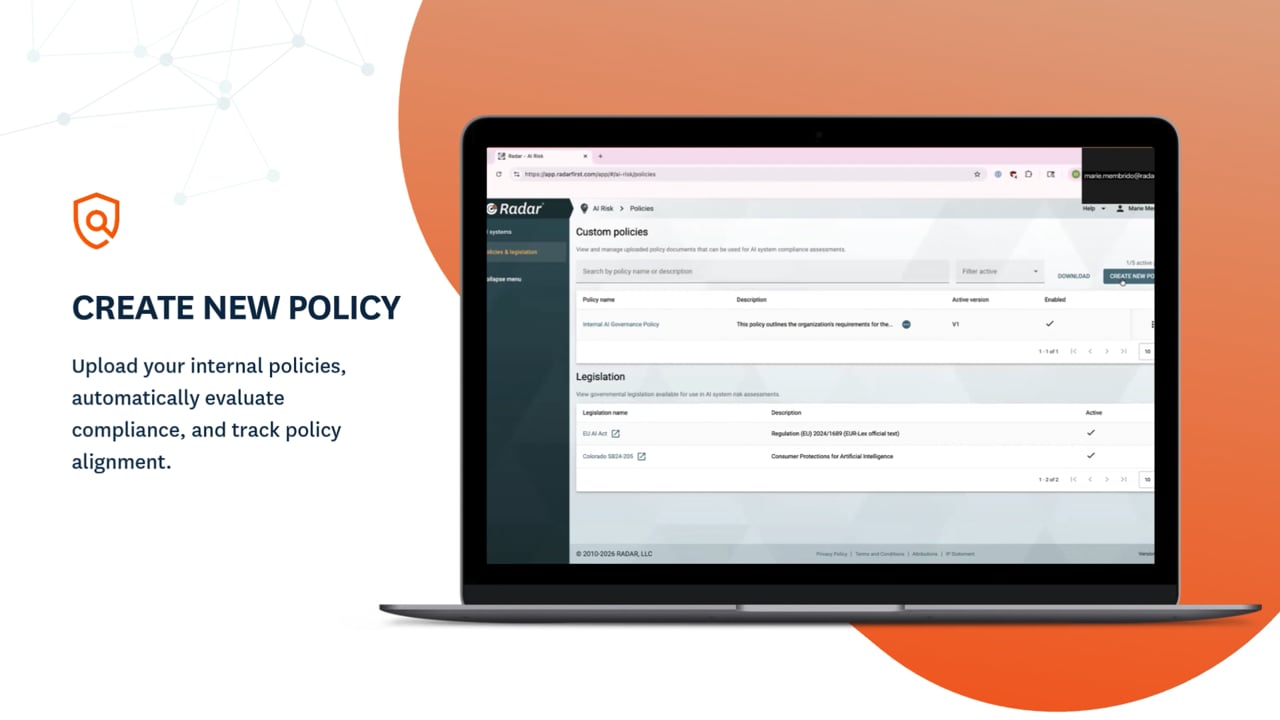
  • Define and refine policies using internal standards and control frameworks
  • Apply them consistently across every AI system and use case
  • Generate clear outputs with supporting rationale and citations

A System of Record for AI Governance

  • Maintain a centralized AI system inventory and system of record
  • Track changes over time with version control
  • Create a single source of truth for internal stakeholders

Govern AI at Scale, Without Manual Work

  • Capture AI system data through guided intake
  • Assess systems quickly as adoption grows
  • Maintain consistency across teams and business units

Platform Capabilities

Built for AI Inventory, Risk Classification, and Governance at Scale

Radar AI Risk helps teams define, apply, and evolve AI governance policies across systems, teams, and use cases.

It uses a structured decisioning engine to assess AI systems against internal policies and regulatory frameworks. Organizations can incorporate standards such as the EU AI Act, NIST, or ISO into their governance policies, ensuring consistent, explainable outcomes and clear documentation for stakeholders.
AI Inventory
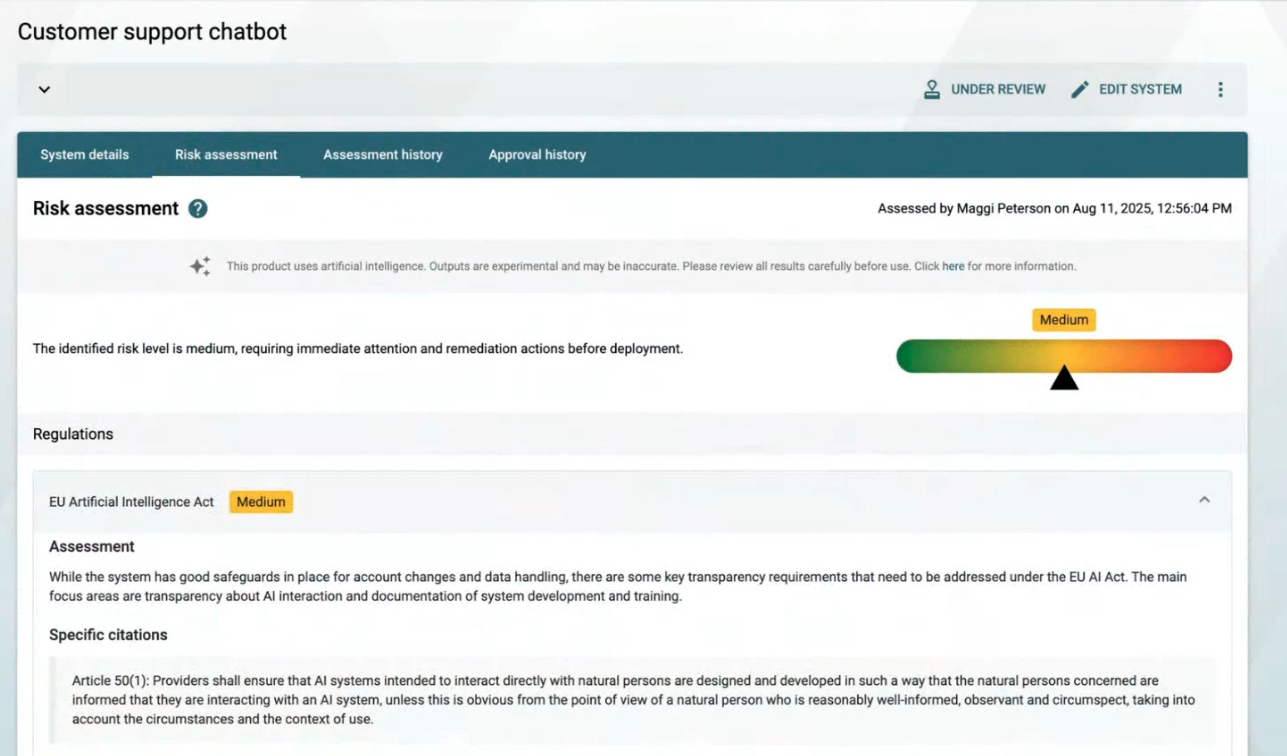
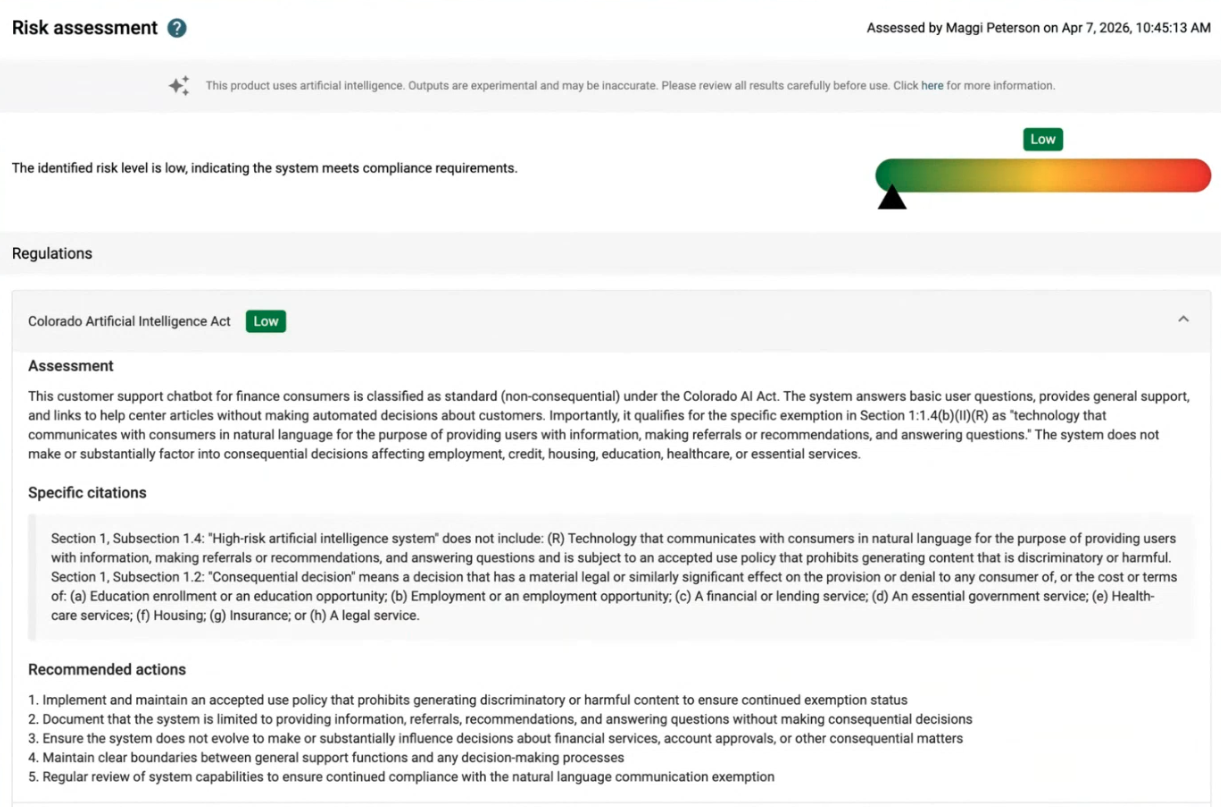
Risk Assessment
Audit Readiness

Build and Maintain a Complete AI Inventory

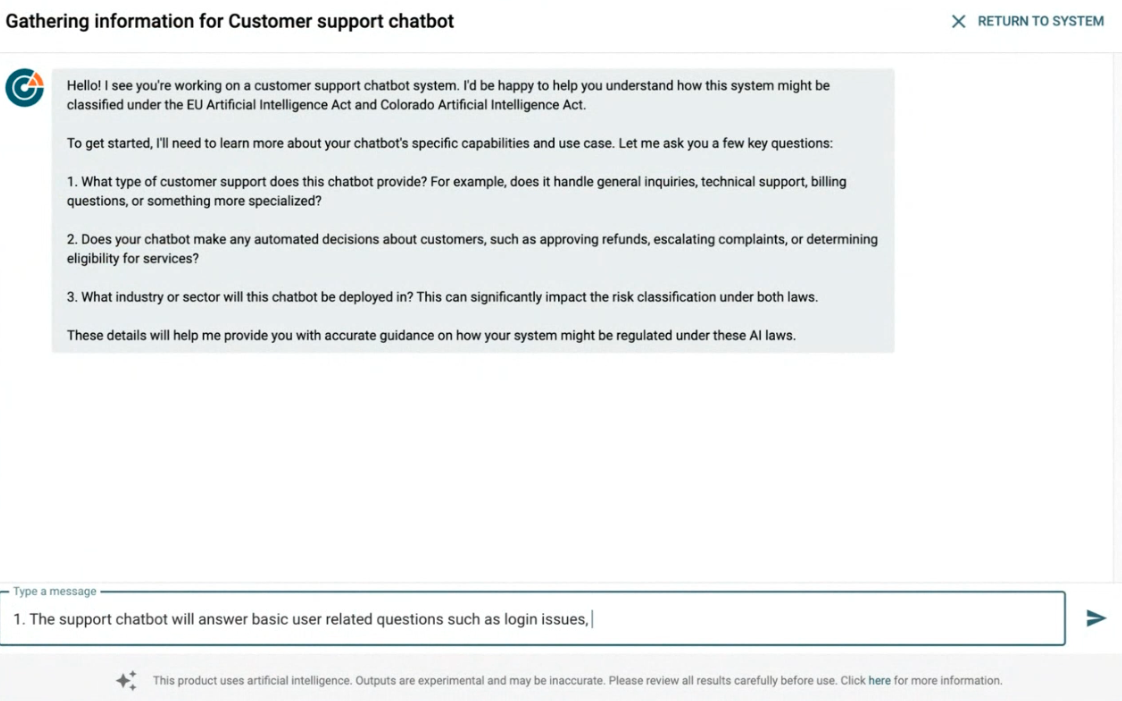
  • Create a centralized inventory of AI systems with structured, high-quality data captured through guided, conversational intake.
  • Centralized inventory with ownership, use cases, and system context
  • AI-assisted intake
  • Consistent, structured data across teams

Evaluate and Classify AI Systems Against Policies and Frameworks

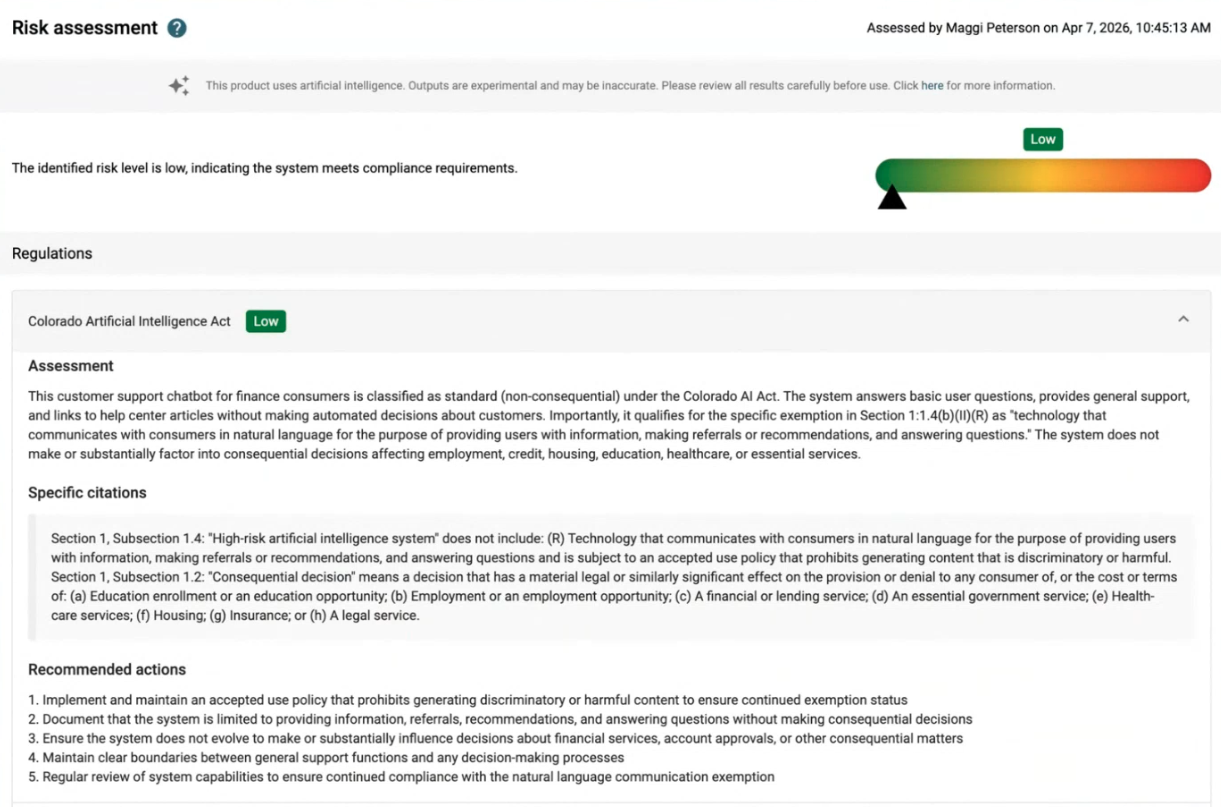
  • Assess and classify AI systems against internal policies and control frameworks using structured decision logic
  • Apply consistent evaluation criteria across teams
  • Incorporate internal governance standards directly into decision workflows
  • Reduce reliance on subjective interpretation
  • Communicate risk, compliance status, and outcomes clearly to stakeholders

Generate Defensible, Audit-Ready AI Governance

  • Produce clear, explainable decisions and maintain a complete, traceable record with mapped citations to policies and regulations.
  • Document decisions with clear rationale
  • Maintain a version-controlled system of record
  • Track changes and overrides over time
  • Support audit, board, and internal reporting

Features

From Policy Creation to Governance at Scale

  • Manage AI systems, assess compliance, and generate audit-ready documentation in a single platform.
  • Centralized AI system inventory with lifecycle tracking
  • Custom policies and control frameworks applied across systems
  • Ability to reassess systems at any time
  • AI-assisted intake for consistent, high-quality AI system data
  • Audit-ready documentation with version control and clear rationale

Request A Demo

Process

From Policy to Defensible AI Governance

Define

Create and refine policies using internal standards and control frameworks.

Assess

Assess and classify AI systems against structured policy criteria and compliance requirements.

Govern

Document decisions and align teams around consistent governance.

Evolve

Update policies and reassess systems as requirements change.

“Navigating privacy incidents across complex global jurisdictions is incredibly challenging, and RadarFirst gives us the benchmarking, consistency, and confidence we need to manage regulatory risk at scale.”

Evgeniy Bekyarov
Privacy Incidents Manager, HP Inc.

“RadarFirst has been a great tool for our team. We use it to collect and manage incidents across the company, centralizing everything from emails to Slack messages so we can conduct risk assessments efficiently. My favorite feature is how it determines whether a breach is reportable, including which states are affected and the required timelines. It removes the need for manual research and gives immediate guidance after completing an incident review, which makes the whole process much easier.”

Adaku
Leading healthcare organization

“Radar has been a great tool for our team. It centralizes incidents from across the company and makes risk assessments much more efficient. I especially value how it quickly determines breach reportability, including affected states and timelines, saving us hours of manual research.”

Toshia
Privacy Professional in Healthcare

“Managing privacy incidents with a small team requires both efficiency and consistency, especially when navigating complex regulatory requirements. RadarFirst has transformed how we approach incident response by providing a structured, defensible framework that reduces our reliance on outside counsel and gives us greater visibility into our decisions. It has become an important part of how we manage privacy risk.”

Manager
Privacy & Security, Englewood Health

“RadarFirst has become a core part of how we manage privacy incidents day to day, providing a consistent, structured approach and clear visibility across our team. As our needs have evolved, it has scaled with us and continues to support how we manage patient data and regulatory requirements.”

Chrisan Herrod
Corporate Privacy and Information Security Officer at National Pediatric Healthcare System

Why RadarFirst

Why Radar AI Risk for AI Governance

Request A Demo

Policy-Driven Governance

Apply internal policies consistently across every AI system

Framework-Aligned Decisions

Evaluate AI systems based on models such as the EU AI Act and the Colorado AI Act

Operational Workflows

Turn governance policies into structured workflows teams can execute

Cross-Functional Alignment

Align legal, risk, compliance, and business teams in one system

Scalable Decisioning

Govern AI systems at scale without increasing manual effort

Featured Resource

2026 Privacy Benchmarking Report

Data-driven insights for privacy, compliance, legal, and IT risk leaders. Benchmark your incident response strategy and explore what AI means for the future of privacy.

Read More

FAQs

Frequently Asked Questions

Get answers to common questions about AI risk governance, including how organizations inventory AI systems, classify risk, and align with regulatory requirements.

What is AI risk governance?

AI risk governance is the process of evaluating AI systems against internal policies and regulatory frameworks to ensure compliant, explainable, and auditable AI use across the organization.

What is AI risk classification?

AI risk classification evaluates and categorizes an AI system against internal policies, control frameworks, and regulations to determine its risk level, required controls, and governance actions.

Why is AI risk governance important?

AI adoption is accelerating as regulatory expectations rise, including through established regulations such as the EU AI Act. Without structured governance, organizations rely on inconsistent interpretation, creating operational, legal, and reputational risk.

What is an AI system inventory and why does it matter?

An AI system inventory is a centralized record of all AI systems, including their purpose, risk classification, and governance requirements. It provides visibility, supports consistent decision-making, and is critical for demonstrating compliance.

How does Radar AI Risk help organizations govern AI systems?

Radar AI Risk enables organizations to inventory AI systems, assess and classify risk against internal policies and regulatory frameworks, and generate audit-ready documentation using structured, consistent workflows.
Let’s Get Started

Trusted by leading organizations, RadarFirst enables teams to manage incidents with speed, consistency, and defensibility by standardizing how incidents are captured, assessed, and actioned.