Recent Resource

Recent Resource
Featured Resource
Radar Privacy
Assess privacy risk, interpret global data breach notification laws, and make fast, accurate, and defensible breach determinations.
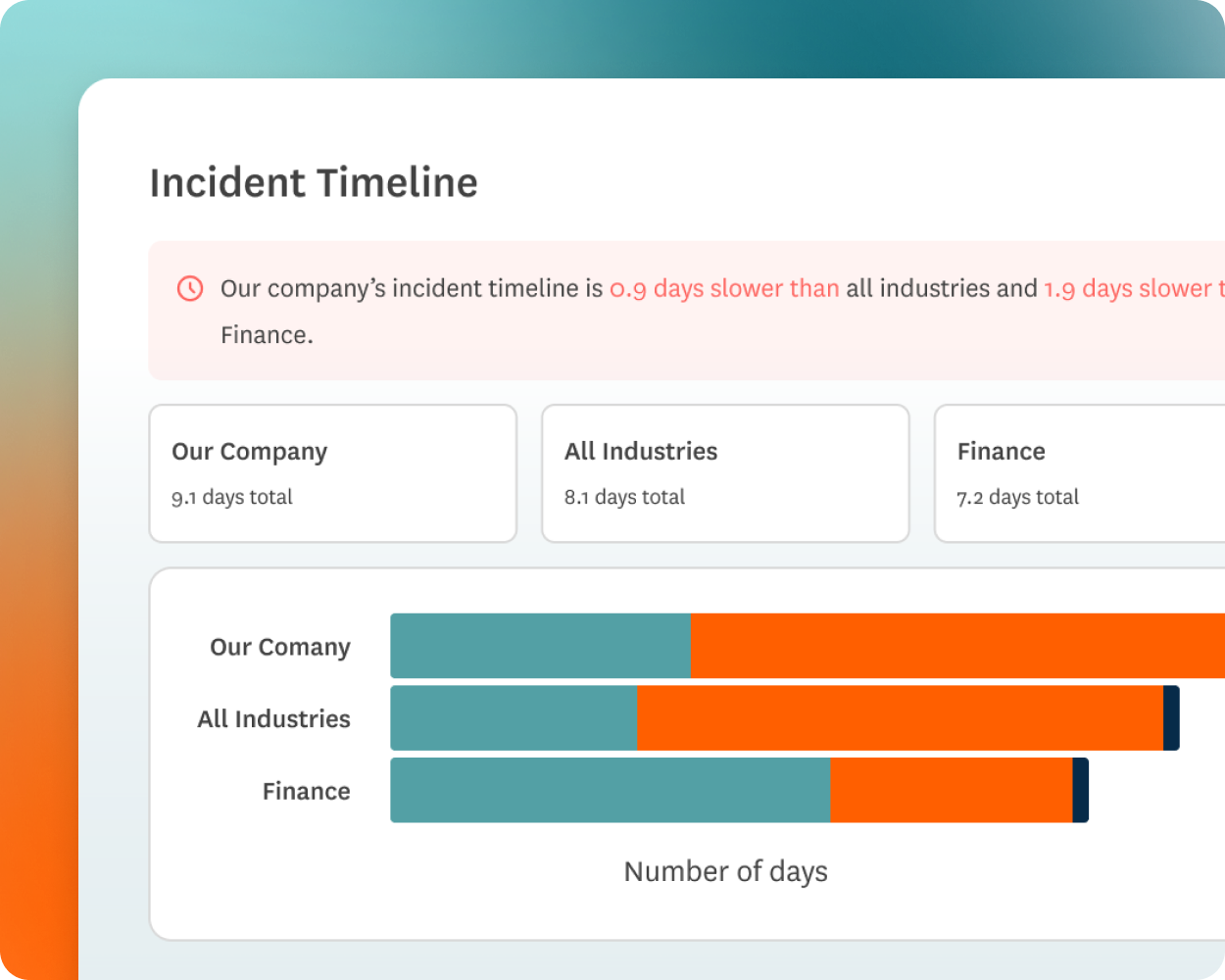
Privacy incident management requires fast, accurate, and defensible decisions under regulatory pressure. Radar Privacy helps you interpret complex laws, assess real risk, and determine notification obligations with clear, structured guidance your team can rely on.


Platform Capabilities
Structure intake, assessment, legal interpretation, and documentation into a single workflow for consistent, defensible breach decisions.
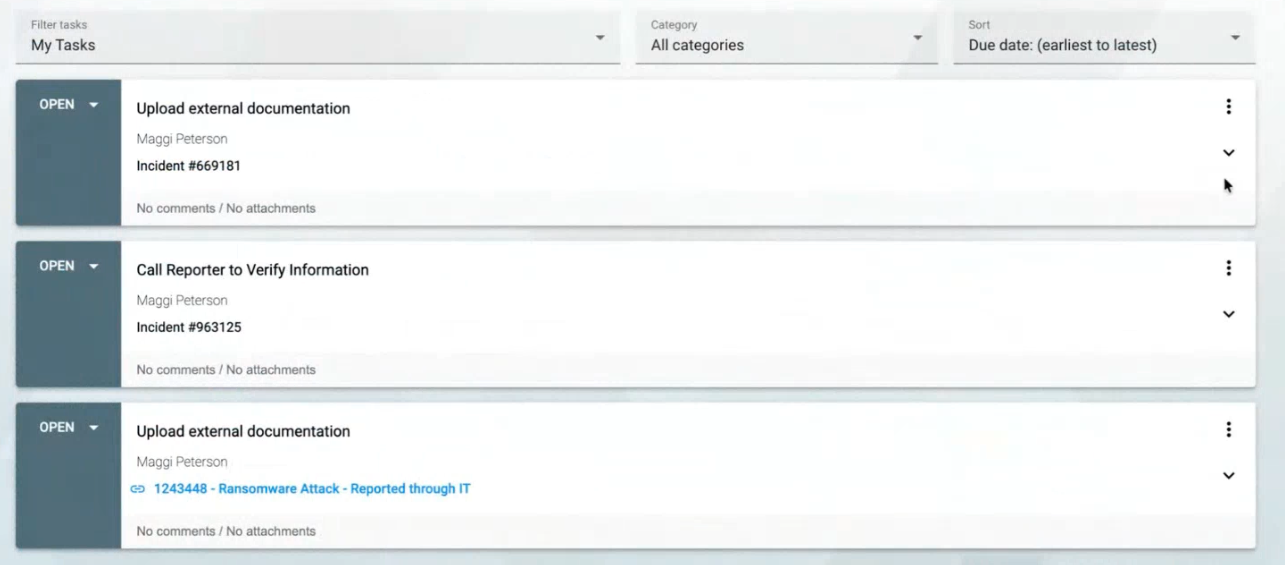
Capture and standardize incident details from any source so every assessment begins with complete, reliable information. Radar Privacy ensures critical context is preserved across emails, tickets, and systems, creating a strong foundation for accurate decision-making.
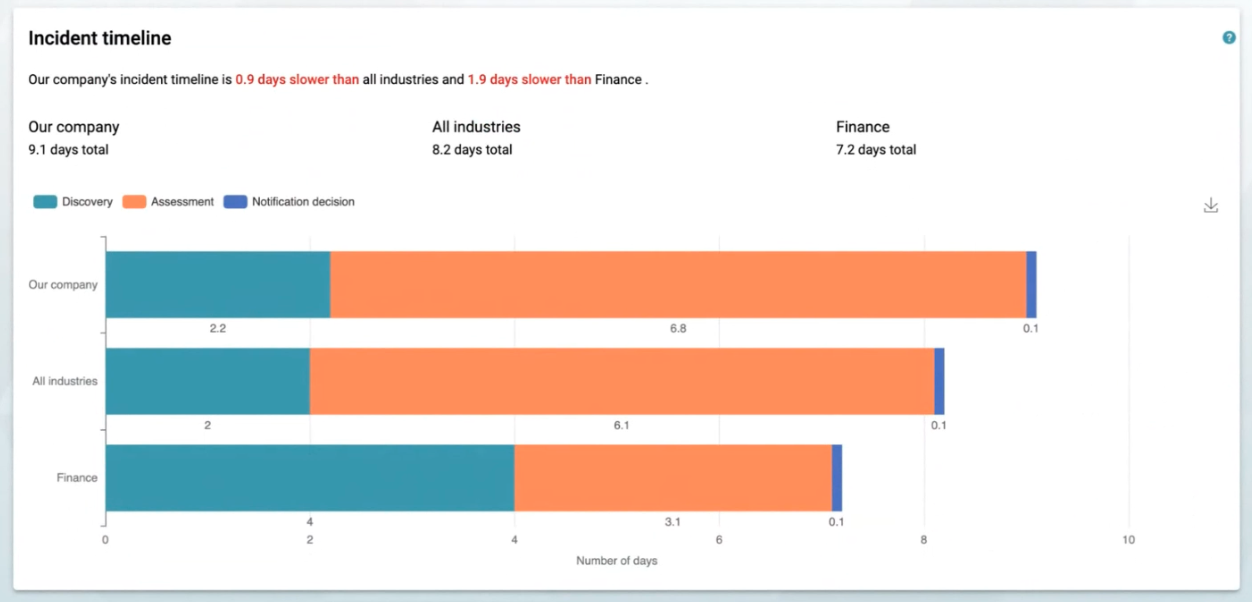
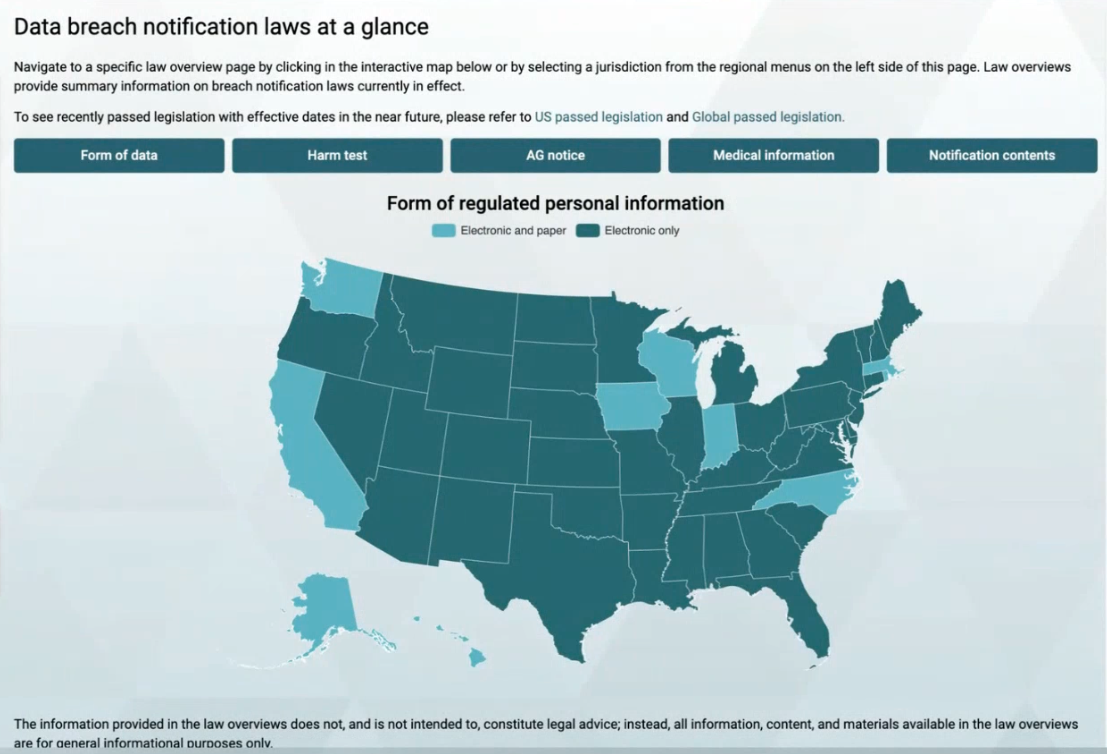
Evaluate incidents using structured decision logic aligned to legal standards and internal policies. Radar Privacy maps incident details to applicable privacy laws and jurisdictions in real time, ensuring consistent risk-of-harm assessments and correct regulatory interpretation.
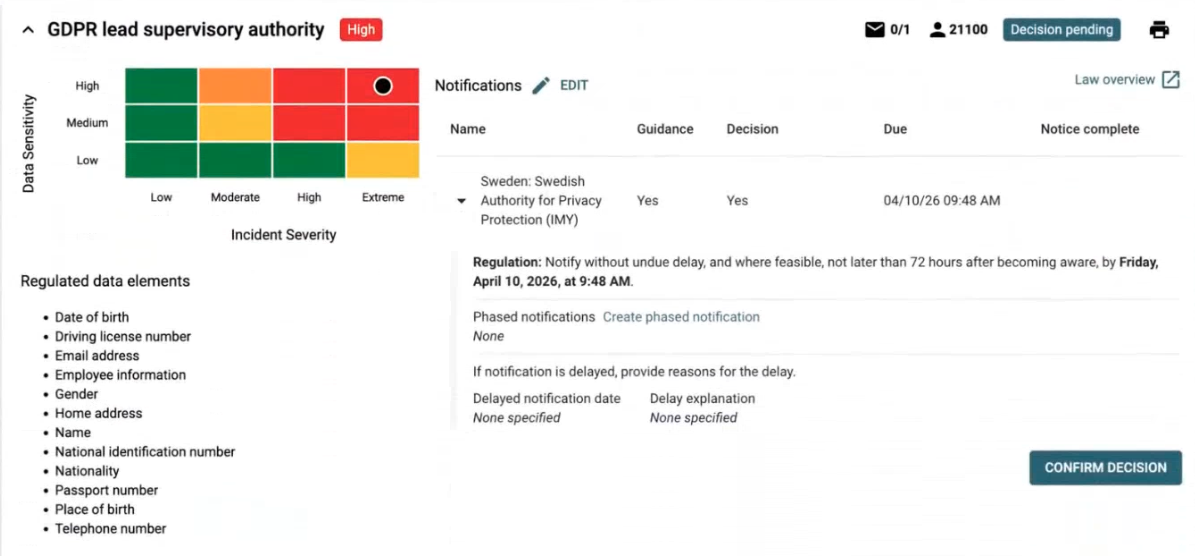
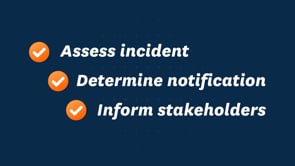
Understand if an incident meets the notification threshold, who must be notified, and what actions are required next. Radar Privacy ties each outcome directly to applicable laws and preserves full documentation for regulators and stakeholders.
AI-driven support across key steps in the incident lifecycle to improve speed, data quality, and investigation workflows, while your team retains control and oversight over decisions.
Features
Manage privacy incidents, apply legal requirements, and support clear, defensible decisions in a single platform.
Process

Eliminate blind spots with structured incident intake.
Evaluate applicability, risk, and obligations in minutes.
Apply regulatory logic and decisioning models to reach consistent outcomes.
Maintain complete, audit-ready records without manual effort.

Designed for breach determination with structured workflows from intake to outcome.

Translate global privacy laws into consistent, decision-ready logic.
Maintain clear, auditable decisions with complete, traceable documentation.
Trusted at scale with millions of decisions delivered across regulated industries.
Improve speed and data quality with AI-assisted workflows while maintaining human control.
FAQs
Get clear answers to common questions about privacy incident management, breach determination, and how to make consistent, defensible decisions under regulatory pressure.
Privacy incident management is the process of identifying, assessing, and responding to incidents involving personal data to determine if breach notification is required.
Organizations use this process to evaluate incidents against applicable privacy laws and ensure decisions are documented and defensible.
A breach determination is the process of evaluating whether a privacy incident meets the legal threshold for notification.
This includes determining if individuals, regulators, or other parties must be notified under applicable laws.
A privacy incident is any event involving potential exposure or misuse of personal data, while a data breach is an incident that meets the legal threshold requiring notification.
Not all incidents are breaches, which is why structured assessment is required.
Organizations determine if a privacy incident is reportable by evaluating legal thresholds based on the type of data involved, the likelihood of harm, and applicable laws across jurisdictions.
This requires applying legal criteria consistently and documenting the rationale behind each decision.
Breach determination is difficult because privacy laws vary by jurisdiction and require evaluating multiple factors such as data type, context, and likelihood of harm.
These decisions often need to be made quickly, with incomplete information and significant regulatory risk.
Radar Privacy uses AI-assisted workflows to improve speed and consistency across parts of the incident lifecycle, but it does not replace regulatory decision-making.
Privacy incident management requires structured, repeatable decision guidance aligned to current laws. Radar Privacy maps decisions to applicable regulations and produces audit-ready documentation, while your team remains responsible for final determinations.
Featured Resource
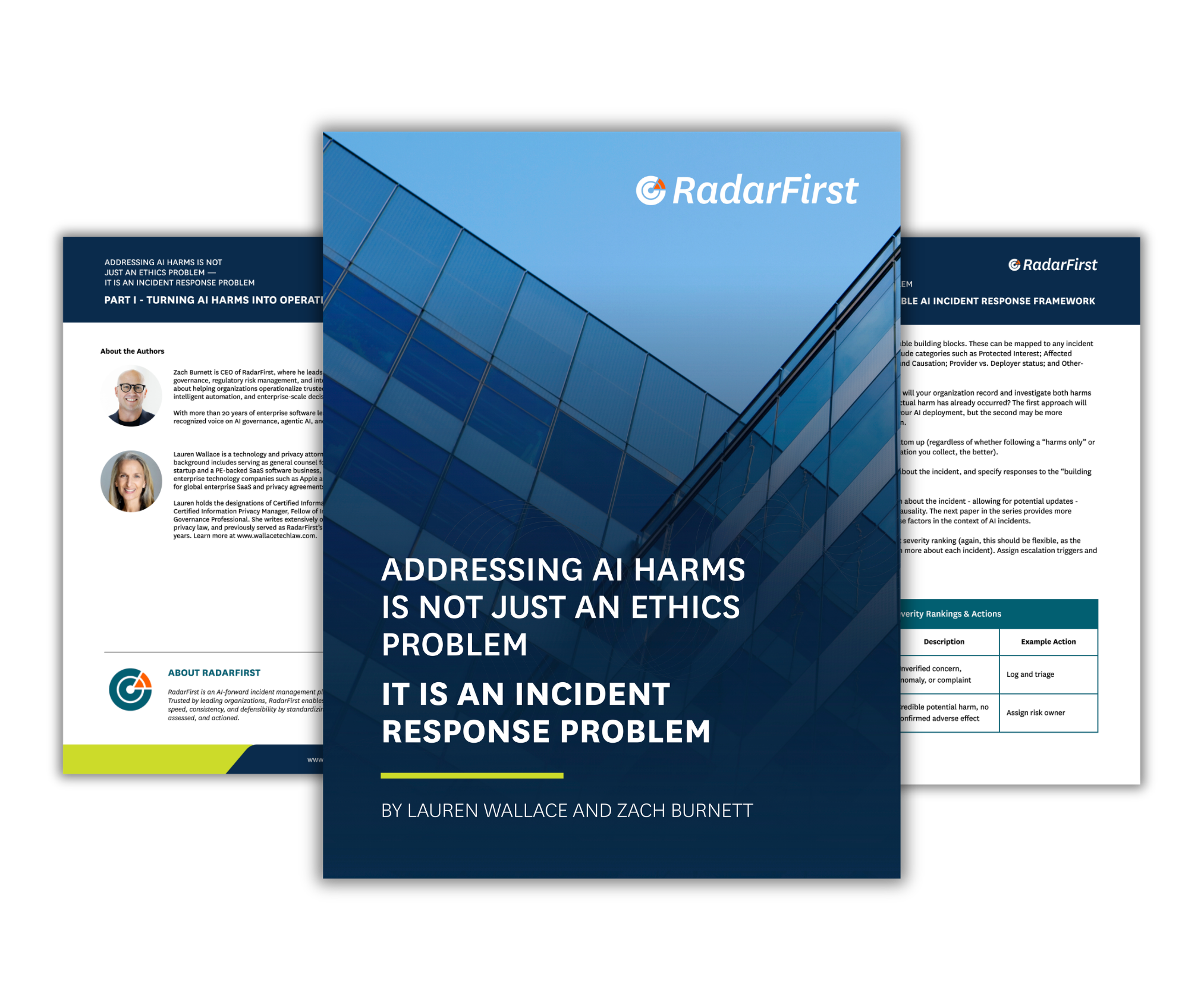
This three-part white paper series examines AI harms through an operational incident-response lens.
Each paper provides expert insights on how organizations define AI incidents, build a structured and defensible response framework, and make critical decisions about causality, severity, escalation, and reporting.

Trusted by leading organizations, RadarFirst enables teams to manage incidents with speed, consistency, and defensibility by standardizing how incidents are captured, assessed, and actioned.