

Search Results
Found 83 results for: AI

When AI Breaks Its Promises. The Copilot Confidential Email Incident and What It Teaches Us About Privacy Risk
The Microsoft 365 Copilot vulnerability highlights a new era of privacy risk. Confidential emails protected by DLP policies were still processed for AI summarization, exposing a gap between intended controls and actual AI behavior. For privacy leaders, this is the shift. Incident management must now account for AI systems that operate beyond governance expectations. […]
Read More

Privacy Incident Management in the Age of AI-Driven Threats
Artificial intelligence is reshaping both innovation and risk. As AI tools are leveraged to accelerate sophisticated cyberattacks, the volume and speed of potential data exposure increases dramatically. For privacy leaders, this means modernizing privacy data management and incident response programs to detect, assess, and contain AI-enabled threats before they escalate.
Read More

“Why Would We Put Something This Sensitive Into a System?”
Many organizations hesitate to document sensitive privacy and AI incidents in a formal system. But managing incidents through email threads, spreadsheets, and scattered files does not reduce risk. It increases it. Structured privacy incident management and AI risk management software create consistency, accountability, and defensible documentation when scrutiny inevitably comes.
Read More
RadarFirst Announces Product Vision and Leadership Appointments to Drive Next Wave of AI-Forward Regulatory Risk Management
RadarFirst announced an expanded AI-forward platform strategy and key executive leadership appointments to help organizations operationalize privacy and AI governance. The move strengthens the company’s position in regulatory risk management as enterprises face rising incident volume and global compliance complexity.
Read More
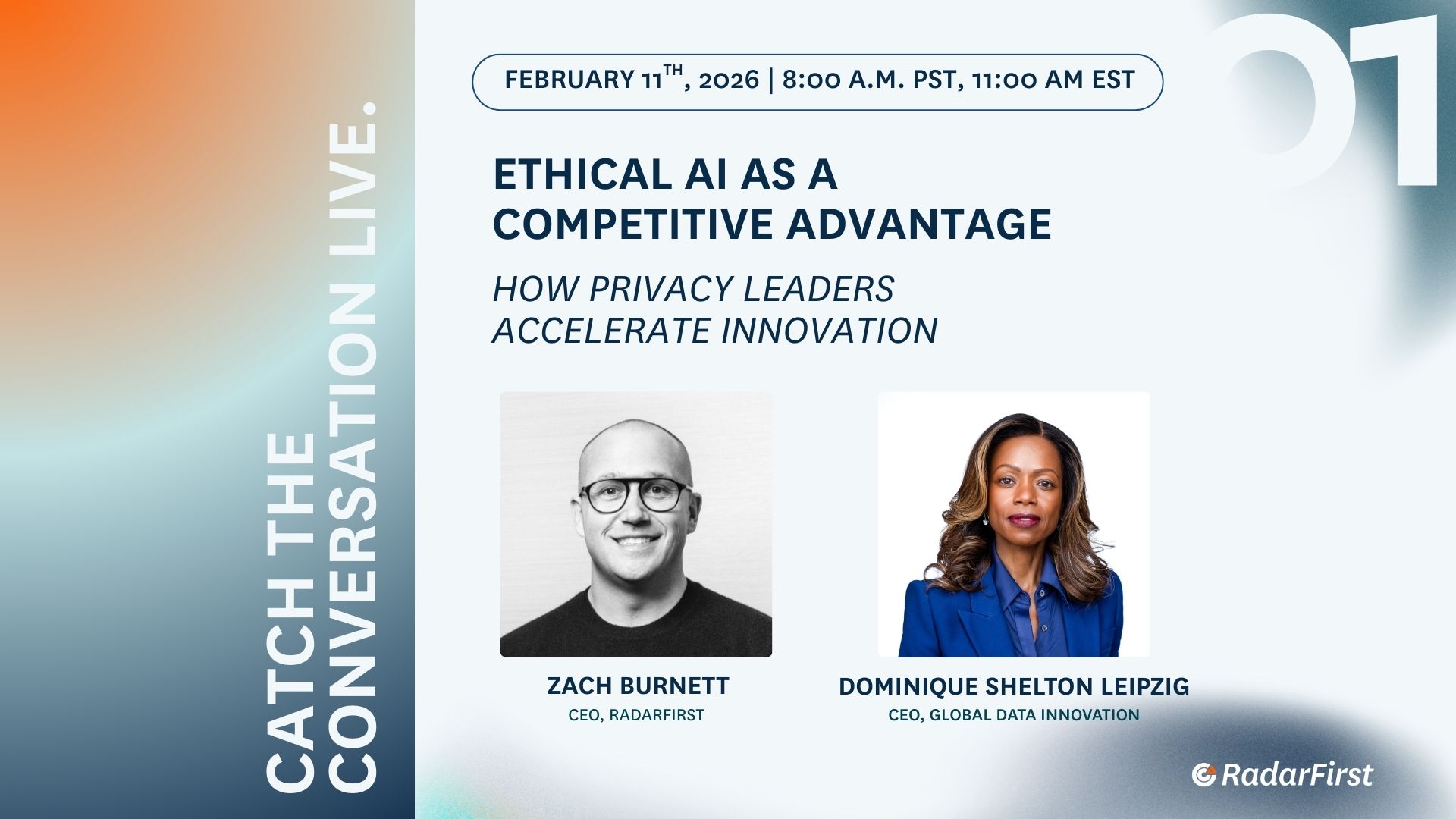
Why AI Incident Management Is the Next Must-Have Layer of AI Governance
AI has changed the speed and scale of privacy incidents. When issues surface, teams must quickly determine what data was involved, which laws apply, and whether notification thresholds are met. Response readiness is no longer optional. It is the foundation of defensible AI privacy management.
Read More

AI Privacy Incidents Are Not The Question. Response Readiness Is.
AI has changed the speed and scale of privacy incidents. When issues surface, teams must quickly determine what data was involved, which laws apply, and whether notification thresholds are met. Response readiness is no longer optional. It is the foundation of defensible AI privacy management.
Read More

Managing AI Privacy Incidents in a High-Risk, High-Speed World
As AI becomes embedded in daily data operations, privacy incidents grow more complex and high stakes. Effective AI privacy incident management requires structured workflows, cross functional coordination, and defensible documentation.
Read More

Why 2025’s Record-High Breaches Demand a New Era of Privacy Incident and AI Risk Management
Data breaches in the U.S. reached an all-time high in 2025, signaling a growing and more complex risk landscape. As incidents become more frequent and less transparent, organizations can no longer rely on manual, reactive approaches. Modern privacy incident management and AI risk governance are now critical to reducing harm, ensuring compliance, and maintaining trust.
Read More

Why Data Privacy Week Matters for Privacy, Compliance, and Risk Management Teams
[…] teams. Clear accountability is essential for audit readiness and regulatory defensibility. Modern Privacy Risk Techniques Like Differential Privacy As organizations rely more heavily on data analytics and AI, traditional privacy controls are no longer sufficient. NIST’s guidance on differential privacy provides a foundation for managing privacy risk in advanced data use cases while maintaining […]
Read More

AI Maturity in Healthcare Is Accelerating. Privacy Risk Must Keep Pace.
AI is now operational across healthcare revenue cycle management, clinical workflows, and patient engagement. As adoption accelerates, so does exposure to privacy and HIPAA risk. This article explores why reactive compliance no longer works, how AI-driven RCM expands data risk, and what healthcare leaders must do now to operationalize privacy risk management without […]
Read More

Effective Strategies for AI Risk Management for Privacy and Compliance Teams
AI risk management is no longer theoretical. For privacy and compliance professionals, it requires practical controls to address bias, data privacy, model reliability, and accountability. This guide breaks down the key risks of AI systems and outlines how governance frameworks, explainable AI, and human oversight help organizations meet regulatory expectations while enabling responsible innovation.
Read More

Healthcare Privacy Risk Management in the Age of AI: A RadarFirst Perspective on Amazon One Medical’s Health AI Announcement
As AI powered tools like Amazon One Medical’s Health AI assistant enter the healthcare ecosystem, privacy and compliance leaders face a pivotal challenge. How do you unlock innovation while protecting patient trust and meeting HIPAA obligations. AI can improve access to care and patient engagement, but it also introduces new privacy risks tied to […]
Read More

Top 10 Privacy Incident Metrics Every Healthcare Provider Should Track in 2026
[…] to track: Measure what percentage of incidents are processed using automated workflows or decision support versus manual judgment. According to data from Dialog Health, healthcare organizations leveraging AI and automation tools detected and contained incidents 98 days faster than the average, saving nearly $1 million in incident response costs. 9. Audit Readiness Score Why […]
Read More

AI Governance for Financial Services. Turning Regulatory Risk into Operational Control.
AI is transforming lending, fraud detection, and underwriting, but it also introduces new forms of risk that traditional IT controls cannot address. This article breaks down the key AI risks facing financial institutions, including algorithmic bias, black-box decisioning, and model drift, and explains how governance, explainable AI, and continuous oversight can turn AI […]
Read More

AI Risk in 2026. What Enterprise Privacy and Compliance Teams Are Already Managing
As AI adoption accelerates, enterprise privacy and compliance teams are being asked to manage growing risk with limited resources. Governance has become essential to maintaining visibility, accountability, and control.
Read More
Found 83 results for: AI
When AI Breaks Its Promises. The Copilot Confidential Email Incident and What It Teaches Us About Privacy Risk
The Microsoft 365 Copilot vulnerability highlights a new era of privacy risk. Confidential emails protected by DLP policies were still processed for AI summarization, exposing a gap between intended controls and actual AI behavior. For privacy leaders, this is the shift. Incident management must now account for AI systems that operate beyond governance expectations. […]
Read More Privacy Incident Management in the Age of AI-Driven Threats
Artificial intelligence is reshaping both innovation and risk. As AI tools are leveraged to accelerate sophisticated cyberattacks, the volume and speed of potential data exposure increases dramatically. For privacy leaders, this means modernizing privacy data management and incident response programs to detect, assess, and contain AI-enabled threats before they escalate.
Read More “Why Would We Put Something This Sensitive Into a System?”
Many organizations hesitate to document sensitive privacy and AI incidents in a formal system. But managing incidents through email threads, spreadsheets, and scattered files does not reduce risk. It increases it. Structured privacy incident management and AI risk management software create consistency, accountability, and defensible documentation when scrutiny inevitably comes.
Read More RadarFirst Announces Product Vision and Leadership Appointments to Drive Next Wave of AI-Forward Regulatory Risk Management
RadarFirst announced an expanded AI-forward platform strategy and key executive leadership appointments to help organizations operationalize privacy and AI governance. The move strengthens the company’s position in regulatory risk management as enterprises face rising incident volume and global compliance complexity.
Read More Why AI Incident Management Is the Next Must-Have Layer of AI Governance
AI has changed the speed and scale of privacy incidents. When issues surface, teams must quickly determine what data was involved, which laws apply, and whether notification thresholds are met. Response readiness is no longer optional. It is the foundation of defensible AI privacy management.
Read More AI Privacy Incidents Are Not The Question. Response Readiness Is.
AI has changed the speed and scale of privacy incidents. When issues surface, teams must quickly determine what data was involved, which laws apply, and whether notification thresholds are met. Response readiness is no longer optional. It is the foundation of defensible AI privacy management.
Read More Managing AI Privacy Incidents in a High-Risk, High-Speed World
As AI becomes embedded in daily data operations, privacy incidents grow more complex and high stakes. Effective AI privacy incident management requires structured workflows, cross functional coordination, and defensible documentation.
Read More Why 2025’s Record-High Breaches Demand a New Era of Privacy Incident and AI Risk Management
Data breaches in the U.S. reached an all-time high in 2025, signaling a growing and more complex risk landscape. As incidents become more frequent and less transparent, organizations can no longer rely on manual, reactive approaches. Modern privacy incident management and AI risk governance are now critical to reducing harm, ensuring compliance, and maintaining trust.
Read More Why Data Privacy Week Matters for Privacy, Compliance, and Risk Management Teams
[…] teams. Clear accountability is essential for audit readiness and regulatory defensibility. Modern Privacy Risk Techniques Like Differential Privacy As organizations rely more heavily on data analytics and AI, traditional privacy controls are no longer sufficient. NIST’s guidance on differential privacy provides a foundation for managing privacy risk in advanced data use cases while maintaining […]
Read More AI Maturity in Healthcare Is Accelerating. Privacy Risk Must Keep Pace.
AI is now operational across healthcare revenue cycle management, clinical workflows, and patient engagement. As adoption accelerates, so does exposure to privacy and HIPAA risk. This article explores why reactive compliance no longer works, how AI-driven RCM expands data risk, and what healthcare leaders must do now to operationalize privacy risk management without […]
Read More Effective Strategies for AI Risk Management for Privacy and Compliance Teams
AI risk management is no longer theoretical. For privacy and compliance professionals, it requires practical controls to address bias, data privacy, model reliability, and accountability. This guide breaks down the key risks of AI systems and outlines how governance frameworks, explainable AI, and human oversight help organizations meet regulatory expectations while enabling responsible innovation.
Read More Healthcare Privacy Risk Management in the Age of AI: A RadarFirst Perspective on Amazon One Medical’s Health AI Announcement
As AI powered tools like Amazon One Medical’s Health AI assistant enter the healthcare ecosystem, privacy and compliance leaders face a pivotal challenge. How do you unlock innovation while protecting patient trust and meeting HIPAA obligations. AI can improve access to care and patient engagement, but it also introduces new privacy risks tied to […]
Read More Top 10 Privacy Incident Metrics Every Healthcare Provider Should Track in 2026
[…] to track: Measure what percentage of incidents are processed using automated workflows or decision support versus manual judgment. According to data from Dialog Health, healthcare organizations leveraging AI and automation tools detected and contained incidents 98 days faster than the average, saving nearly $1 million in incident response costs. 9. Audit Readiness Score Why […]
Read More AI Governance for Financial Services. Turning Regulatory Risk into Operational Control.
AI is transforming lending, fraud detection, and underwriting, but it also introduces new forms of risk that traditional IT controls cannot address. This article breaks down the key AI risks facing financial institutions, including algorithmic bias, black-box decisioning, and model drift, and explains how governance, explainable AI, and continuous oversight can turn AI […]
Read More AI Risk in 2026. What Enterprise Privacy and Compliance Teams Are Already Managing
As AI adoption accelerates, enterprise privacy and compliance teams are being asked to manage growing risk with limited resources. Governance has become essential to maintaining visibility, accountability, and control.
Read More← Back to Search